10 March 2026 · 5 min read
Şahdar: The Lived Lines of Cini
Are those fine cracks on the porcelain a flaw? I wrote about why these branch-like lines, which we call "Şahdar", are actually inherent to the porcelain and their story resembling human nature.
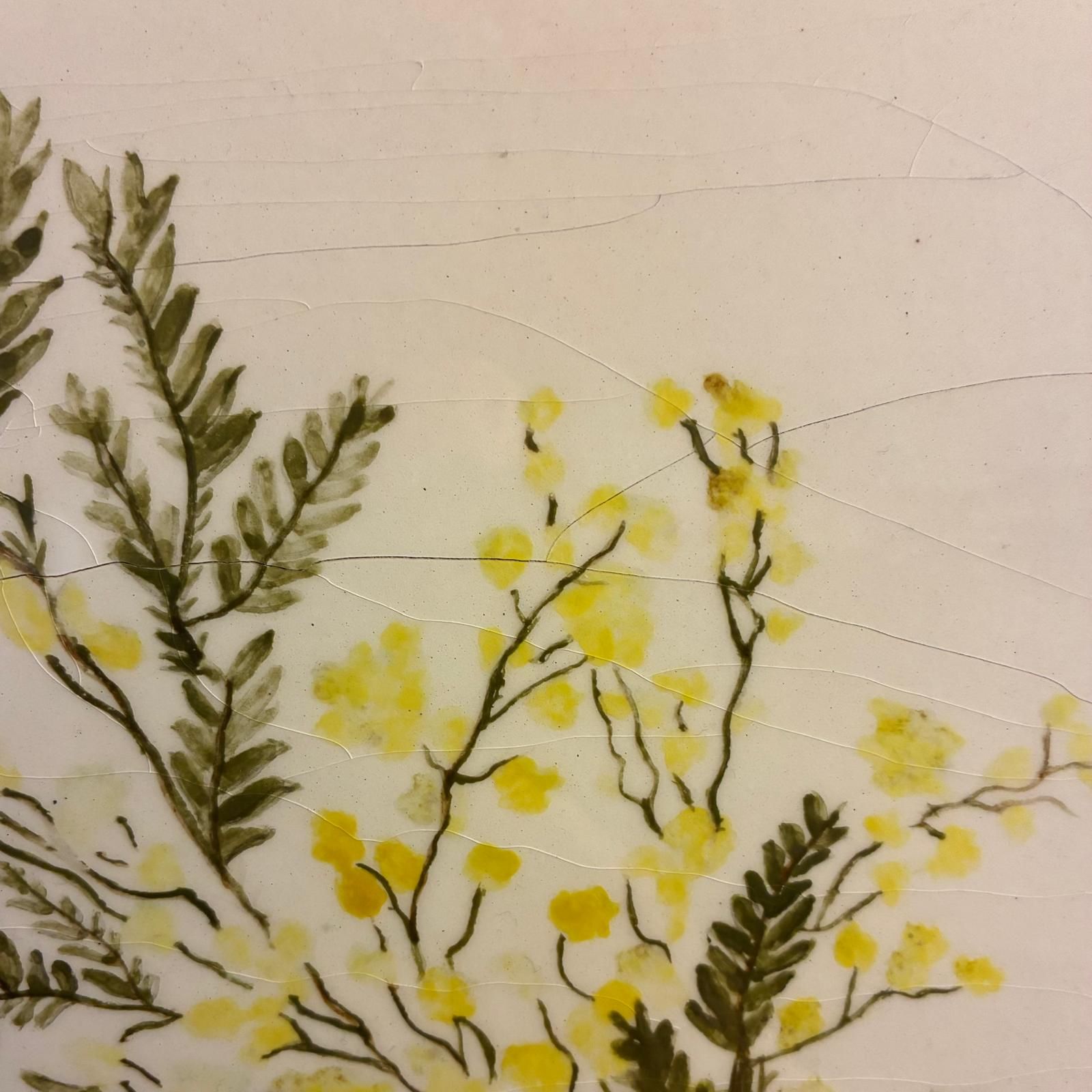
In the workshop, sometimes at the most unexpected moment, a very thin "crack" sound is heard. This sound indicates that the plate or object has now found its own path. We call this "Şahdar". In Ottoman Turkish it means branched and twisted; the glass layer (glaze) on the porcelain cracks over time like the branches of a tree.
Some may think this is a flaw or defect, but in fact, it is quite the opposite. This is a natural, inevitable, and very human process inherent to porcelain, much like the lines and wrinkles that appear on our faces as we age. Old masters also gave it a very precious meaning; they said, "Just as humans’ skin wrinkles as they age, so does porcelain undergo şahdarlık."
The most interesting part is that this process happens entirely in its own time.
Some pieces emit this sound as soon as they come out of the kiln, while others start to crack quietly months or even years later while on the shelves. These lines, formed under the influence of humidity and time, are actually proof that the piece is a "living" one.
So the sharpening of China is not a deterioration, but rather finding its own character.